
What happens if your neighbour doesn’t have home insurance and how it can affect you
Home insurance as a shared protection factor
Although each homeowner is responsible for their own property, risks do not stop at walls or boundaries. Fires, water leaks, electrical faults or structural problems can easily spread from one home to another. Home insurance plays a crucial role not only in protecting individual property, but also in ensuring that damage affecting third parties can be dealt with quickly and fairly. You can explore this further in our guide on the benefits of home insurance.
When a neighbour does not have home insurance, the entire system of protection weakens. Any incident originating in their home may leave others exposed to financial loss and legal uncertainty.
Damage to your property caused by an uninsured neighbour
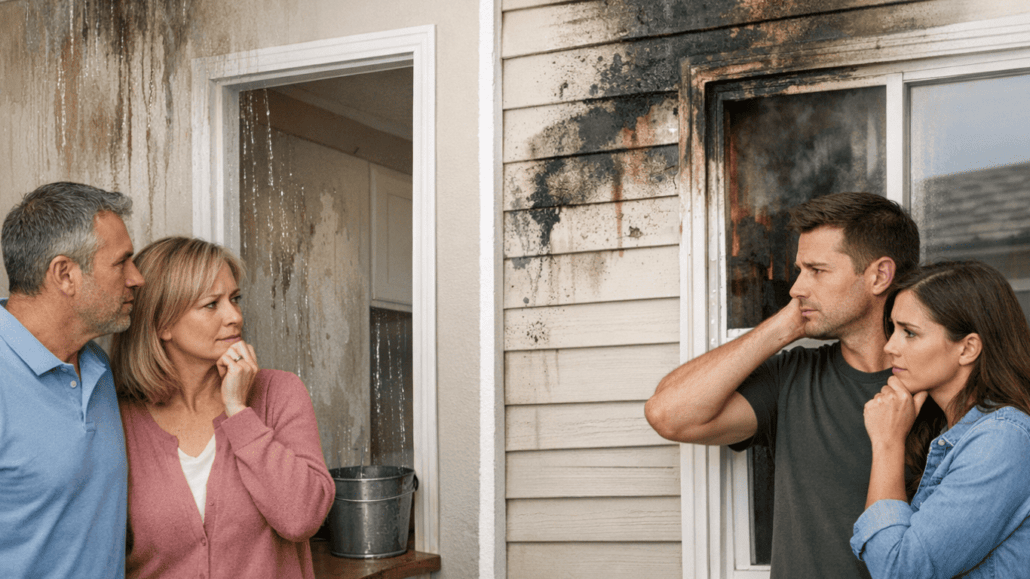
One of the most common and problematic situations arises when damage originates in your neighbour’s home and affects yours. A water leak, fire or structural failure can cause significant harm to your walls, ceilings, floors or belongings. Issues such as leaks are explained in more detail in our article on blocked drains and home insurance coverage.
If your neighbour has no home insurance, there is no insurer to take responsibility for the damage. In theory, your neighbour is legally liable for the costs, but in practice this can become a major issue. If they are unable to pay for repairs, you may be forced to rely on your own home insurance or cover the expenses yourself.
This can lead to higher premiums in the future or unexpected out-of-pocket costs.
Legal complications and disputes
Another key issue when a neighbour doesn’t have home insurance is the increased likelihood of legal disputes. Insurance companies often handle claims between properties efficiently, negotiating compensation and repairs without the need for court involvement.
Without insurance on one side, these processes become far more complex. You may need to initiate legal action to recover damages, which can be time-consuming, expensive and emotionally draining. Understanding civil liability insurance in Spain is key in these situations.
Civil liability and personal injury risks
Home insurance does not only cover material damage. It also includes civil liability protection, which is essential if someone is injured as a result of an incident in the home.
If an accident occurs in your neighbour’s property and you are injured, or if their actions cause harm to you or your family, the absence of insurance can seriously complicate compensation. Without a policy to cover third-party liability, your neighbour may not be able to cover medical expenses, damages or legal costs.
Impact in apartment buildings and shared spaces
The risks associated with an uninsured neighbour are even greater in apartment buildings or properties with shared infrastructure. Plumbing systems, electrical installations and structural elements are often interconnected, meaning that a single fault can affect multiple homes.
In these environments, one uninsured property increases the overall risk for everyone. While building insurance may cover common areas, damage to individual apartments often depends on personal home insurance policies. Learn more about this distinction in our guide to buildings insurance in Spain.

What you can do if your neighbour has no home insurance
If you are aware that your neighbour does not have home insurance, the first step is to ensure that your own policy provides adequate coverage. Reviewing your coverage limits, water damage protection and civil liability clauses can help reduce potential exposure. It is also useful to know whether home insurance is mandatory in Spain.
Open communication can also be helpful. Politely explaining the importance of home insurance as a shared safeguard may encourage your neighbour to take out a policy.
Why home insurance is more than a personal choice
Home insurance is not just about protecting one’s own belongings. It is a fundamental tool for maintaining financial stability and social responsibility within residential communities. When everyone is insured, incidents are resolved faster, disputes are reduced and the overall sense of security increases.
An uninsured neighbour introduces uncertainty and risk that can affect multiple households, even if they have acted responsibly themselves.
Conclusion: protecting yourself when others don’t
What happens if your neighbour doesn’t have home insurance goes far beyond their personal situation. It can lead to uncovered damage, legal conflicts and financial stress for others living nearby. While you cannot force a neighbour to insure their home, understanding the risks allows you to take proactive steps to protect yourself.
Ensuring your own coverage is robust, staying informed and promoting awareness of home insurance within your community are the best ways to reduce the impact of situations that are often overlooked until a problem arises.
At BMI Brokers, we help foreigners in Spain meet compulsory health insurance requirements clearly and confidently, without overpaying or risking non-compliance. Our experts explain the legal health insurance obligations based on your visa or residency status, compare compliant policies from trusted insurers, and guide you toward the right level of coverage for your personal situation.
Live and reside in Spain with peace of mind from day one, knowing your health insurance fully complies with Spanish regulations.
Contact us today for personalised advice on mandatory health insurance for foreigners in Spain and avoid delays, visa issues, or unnecessary costs. Visit our blog for more tips, guides, and updates on essential insurance coverage for foreigners living in or relocating to Spain.


